An Indian wedding takes twelve vendors, four months and a hundred phone calls. Shubhzo puts all of it on one screen — and gives the vendors on the other side an app of their own.
Android · coming soon to Google Play
What Shubhzo is
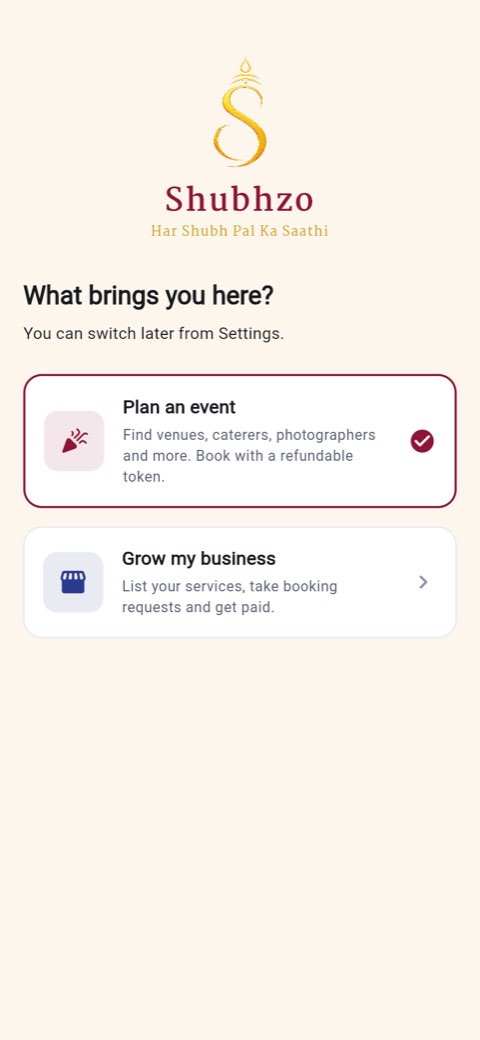
Install it once. The first screen asks what brings you here — Plan an event or Grow my business — and you get an entirely different product, down to the colours. Sign in with a vendor account and you land on the Partner side no matter what you picked.
Most marketplaces ship two apps and ask you to find the right one. Shubhzo ships one binary that contains both. The theme, the navigation and the whole route table follow whichever side you are on — maroon and gold for the customer, indigo and teal for the partner — so a decorator who also plans her own daughter's wedding never has to wonder which app she is looking at.
Switching later lives in Settings → Switch app. It signs you out, because a session belongs to an account with one role.
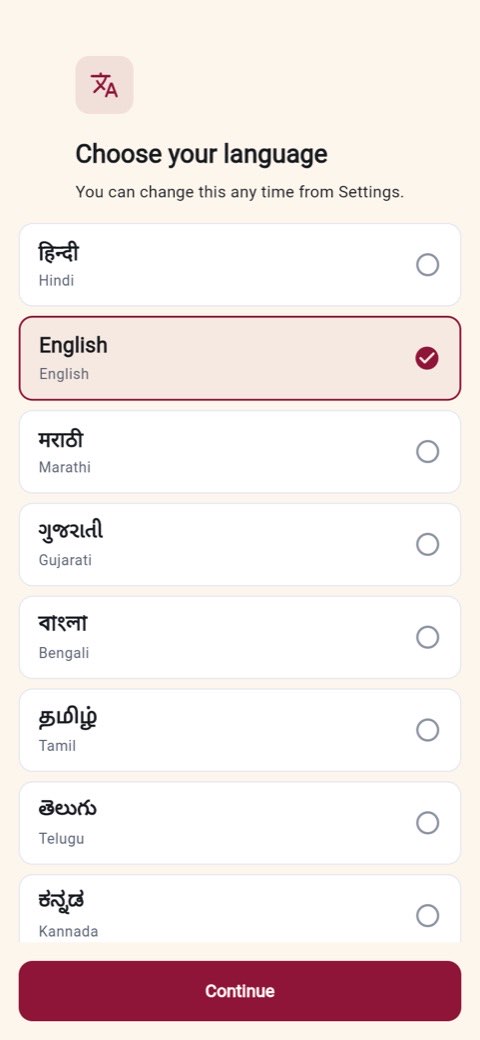
Before any of that, the app asks which language to speak. Eleven are on the list, each in its own script, and the choice applies instantly — no restart, no re-download.
The spine of the product
A small refundable token holds your date. The vendor verifies it in person by scanning your QR. Only when they accept do the two of you get each other's phone numbers.
Every state the app can be in, and the one thing that moves it to the next. The lower path is what happens when a vendor never answers.
The token is what makes a request cost something on both sides. It is small, it is refundable, and it expires on a clock neither party can nudge.
The token scales with what is being held. A venue is a bigger commitment than a pandit, so it costs more to hold. Bar length is the number of services priced at that rung.
The customer app
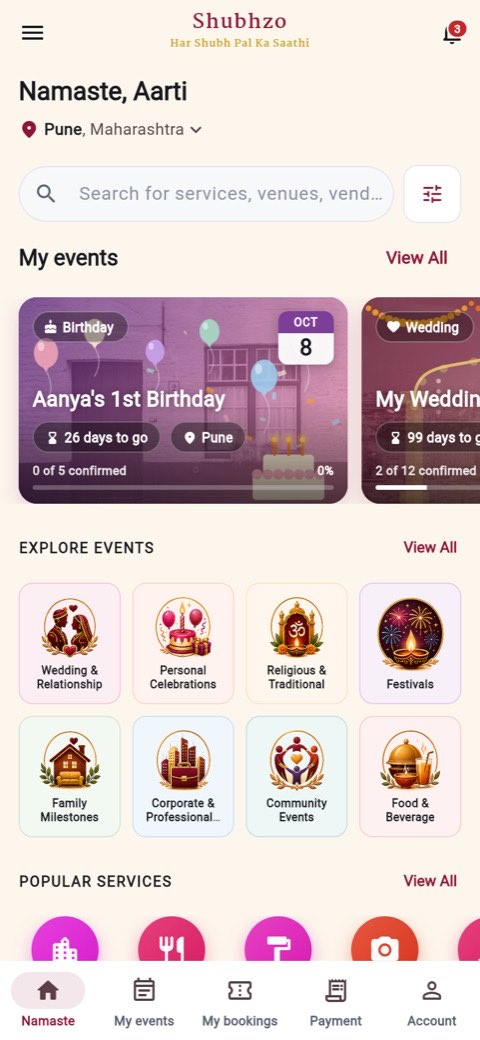
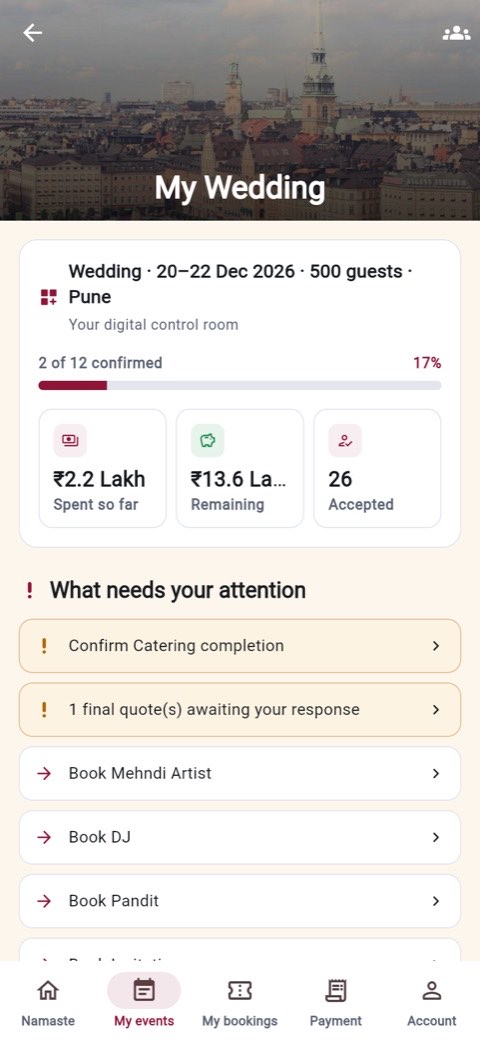
Create the event first, and the app builds the checklist for you — twelve services for a wedding, five for a first birthday — then tracks every one of them against it.
A live checklist of every service the event needs, what needs your attention today, what you have spent against what is left, and the day plan — all on one screen.
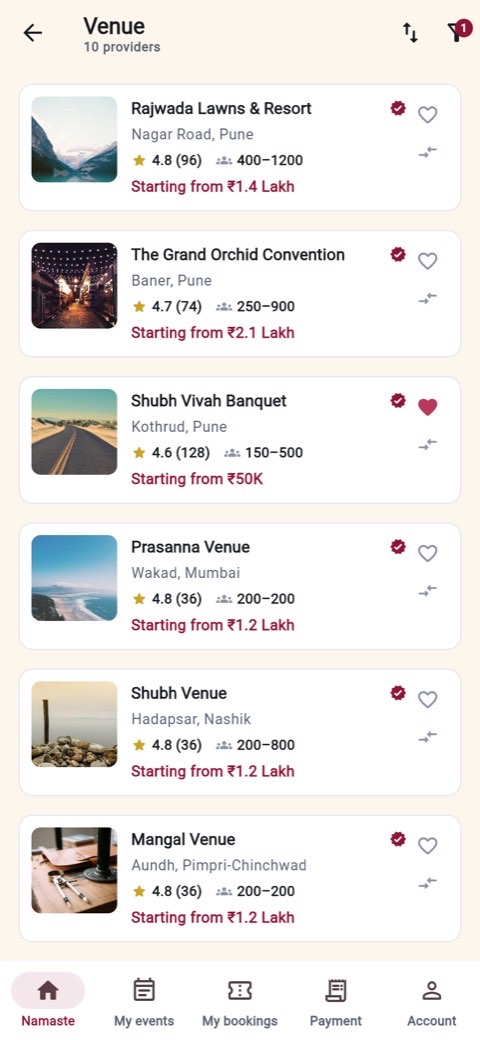
City, price, capacity, rating, free-on-a-date, facilities, verified only. The price and capacity ranges come from the actual results, so there are no dead filter positions.
Side by side, with the best value in each row highlighted — cheapest, highest rated, most experienced — rather than just laid out for you to squint at.
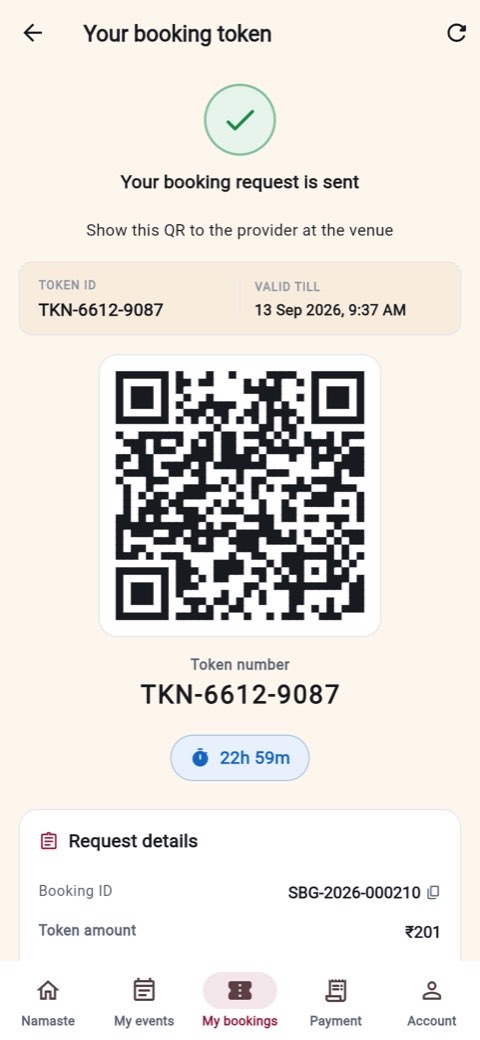
Pay the token, get a QR and a token number. The countdown is real: if nobody answers in 24 hours the money comes back to your wallet on its own.
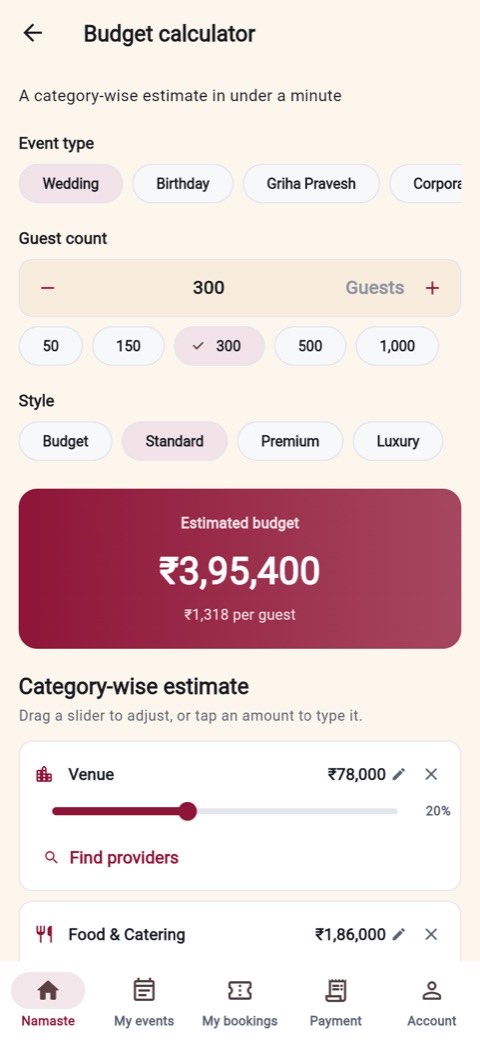
Budget calculator with per-line overrides, guest estimator, food quantity, decor area, and Shubh Muhurat for eleven occasions. No booking required to use any of them.
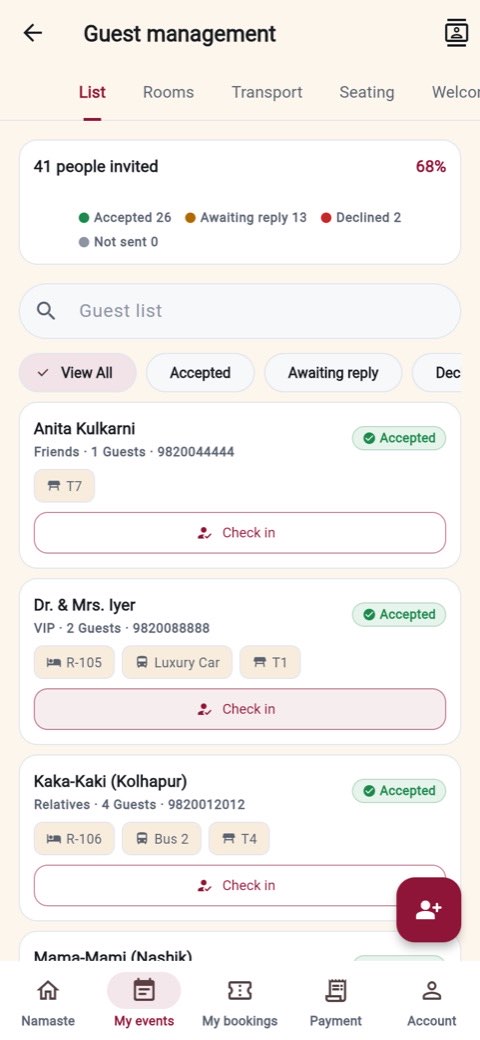
Invite by list or by paste, group by family, track RSVPs against venue capacity, and hold hotel rooms, transport, seating and welcome desks in the same place.
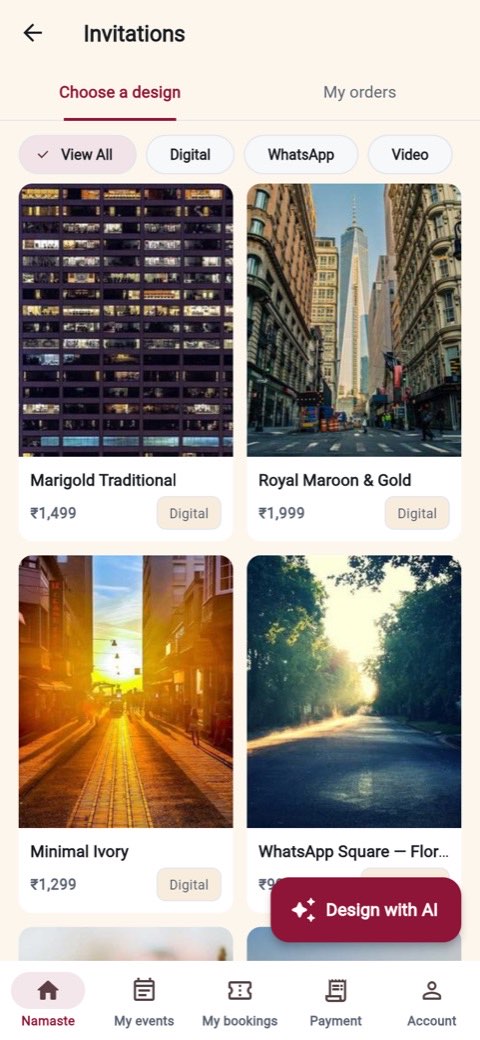
Digital cards, WhatsApp formats, video invites, printed orders and a wedding website. Every guest gets their own RSVP link, so a reply belongs to one guest.
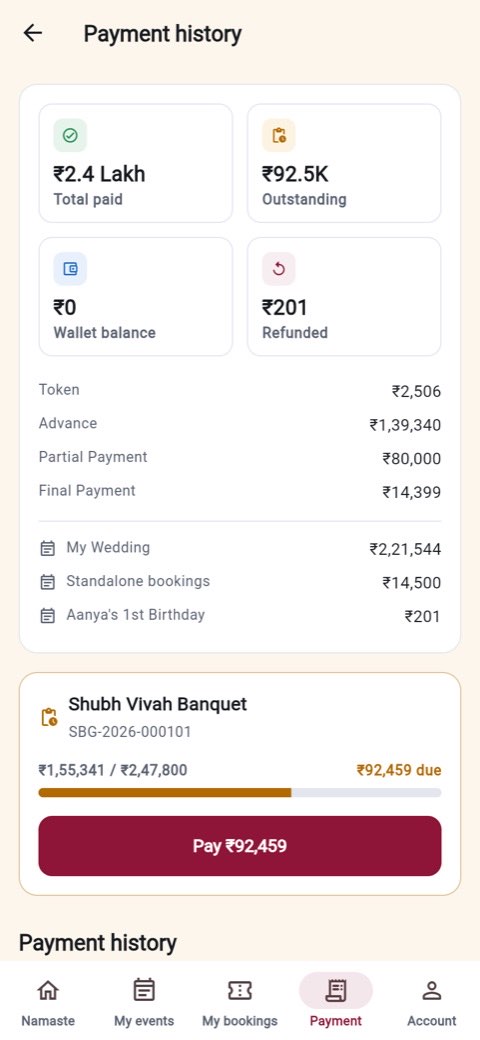
A final quote arrives as line items with the discount, the 18% GST and your token credited off. Accept it and the balance appears. Every receipt is downloadable.
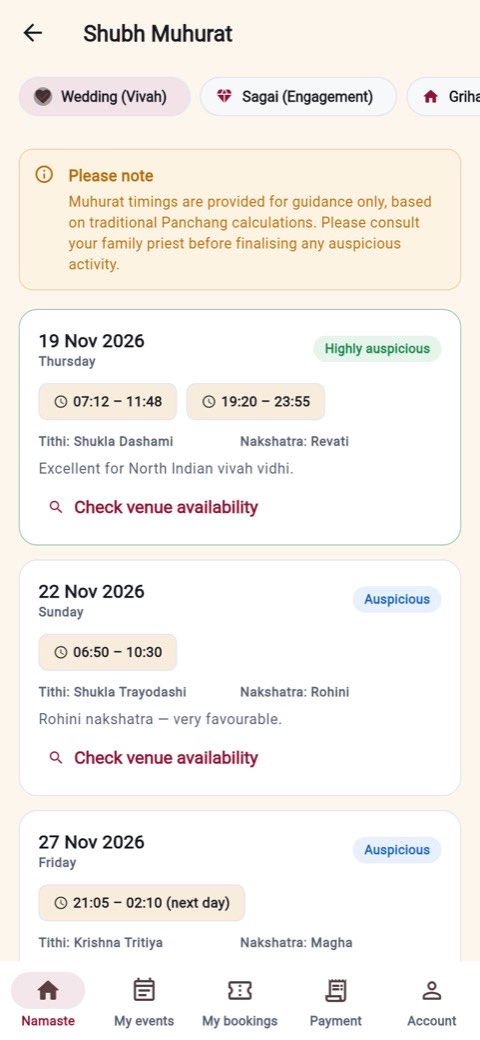
Auspicious windows for eleven occasions with the tithi and nakshatra, each one carrying the disclaimer alongside it rather than buried in a settings page.

Real screens, captured from a running build — nothing staged, nothing mocked up in a design tool.
Home & your events
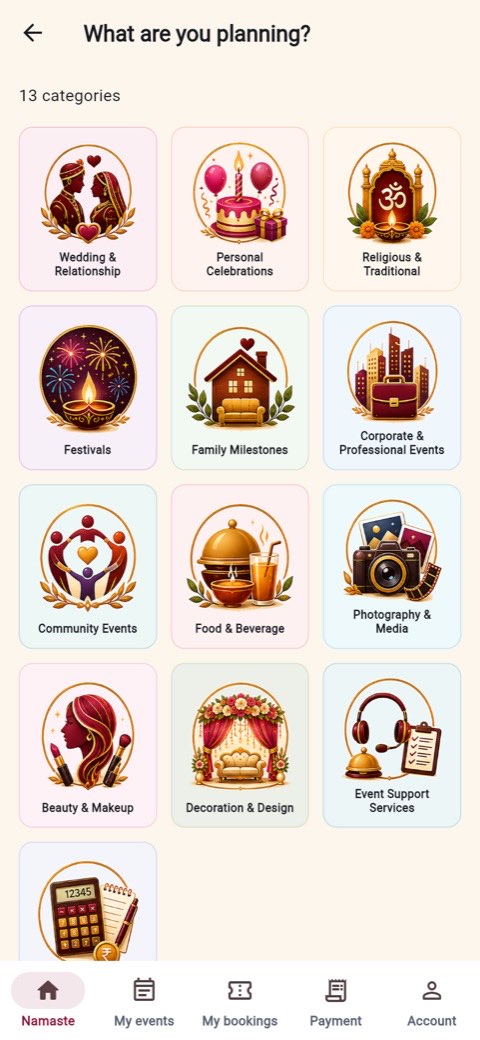
13 illustrated, 29 in all
Browse & filter
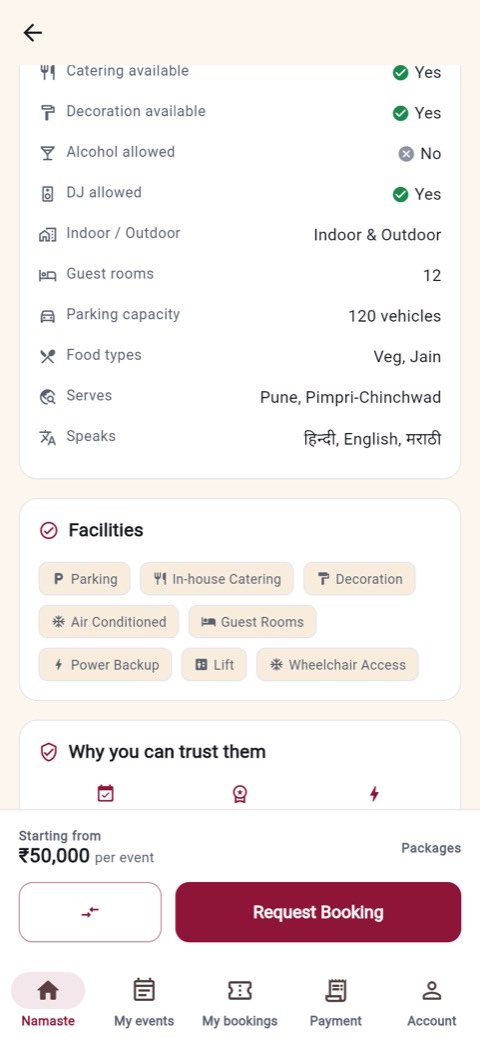
Venue facts & trust
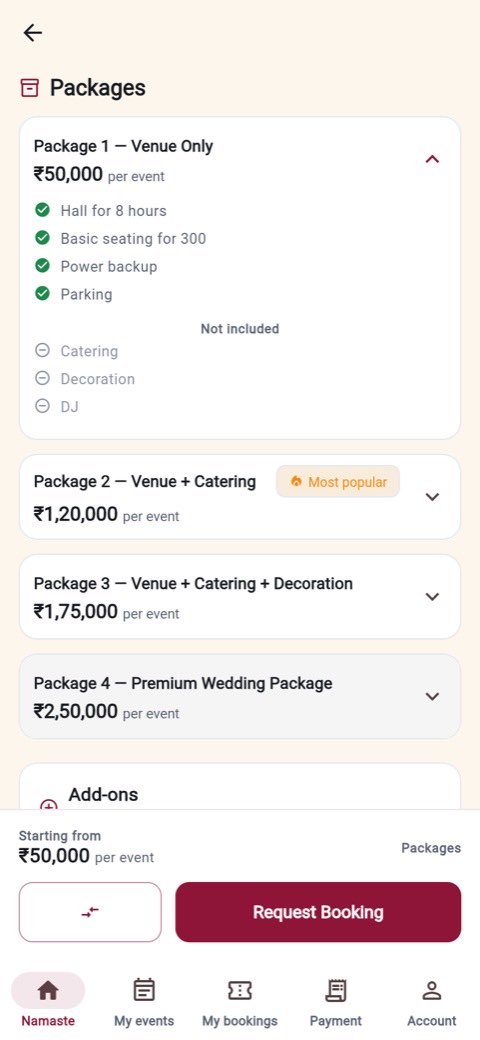
Packages & add-ons
Your token & QR
Event workspace
Budget calculator
Shubh Muhurat
Guests & RSVP
Invitations
Payments & receiptsThe partner app
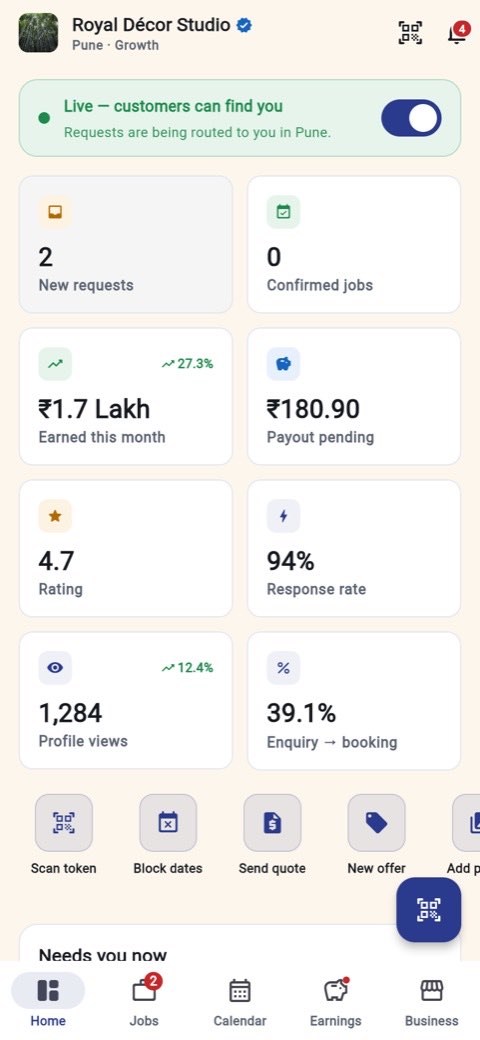
Vendors get a real business app, not a lead inbox: a pipeline, a calendar that cannot be double-sold, earnings arithmetic you can check, and insights that end in something to do.
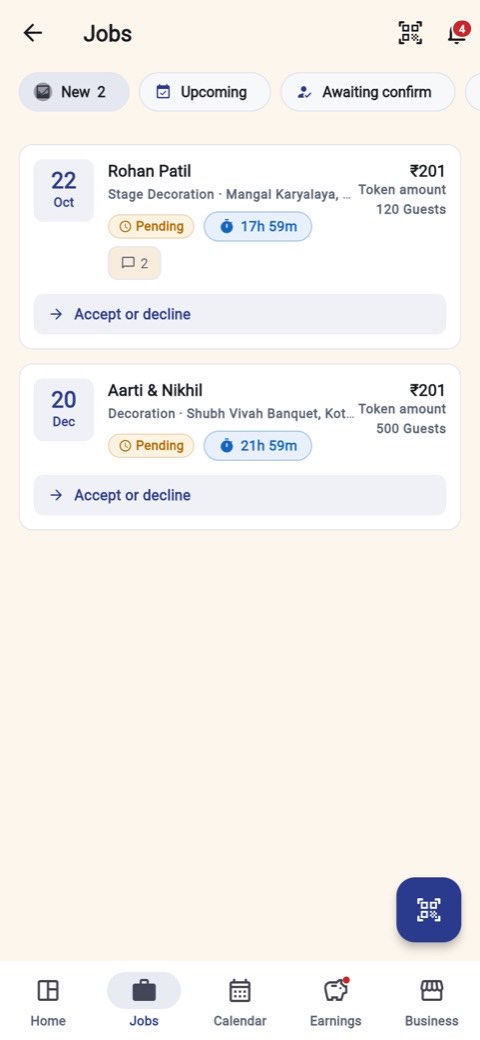
New, upcoming, awaiting confirmation, completed, archive. Every card carries its single next action, so there is never a job you have to work out what to do with.
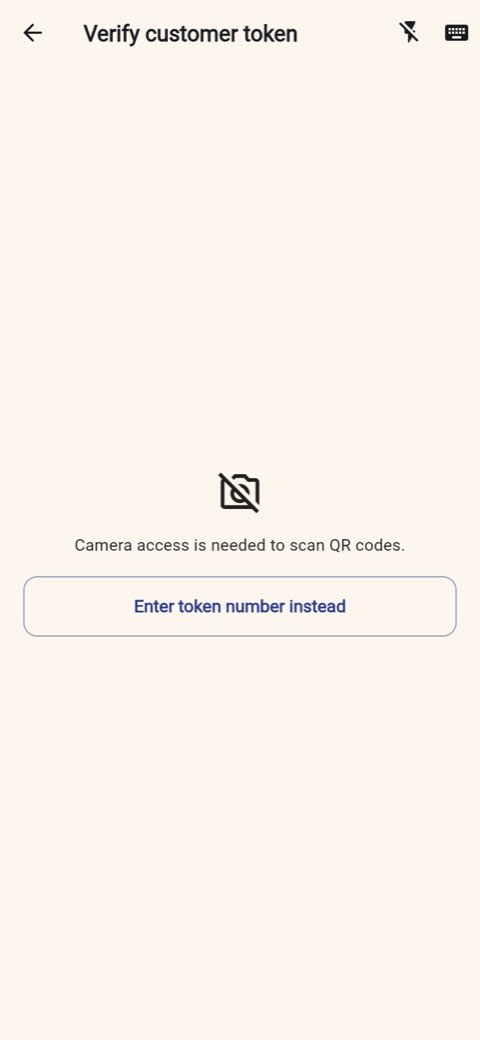
The scanner runs all six of the platform's checks and reports each one separately, so a failure tells you exactly which one failed — and nothing about a customer who isn't yours.
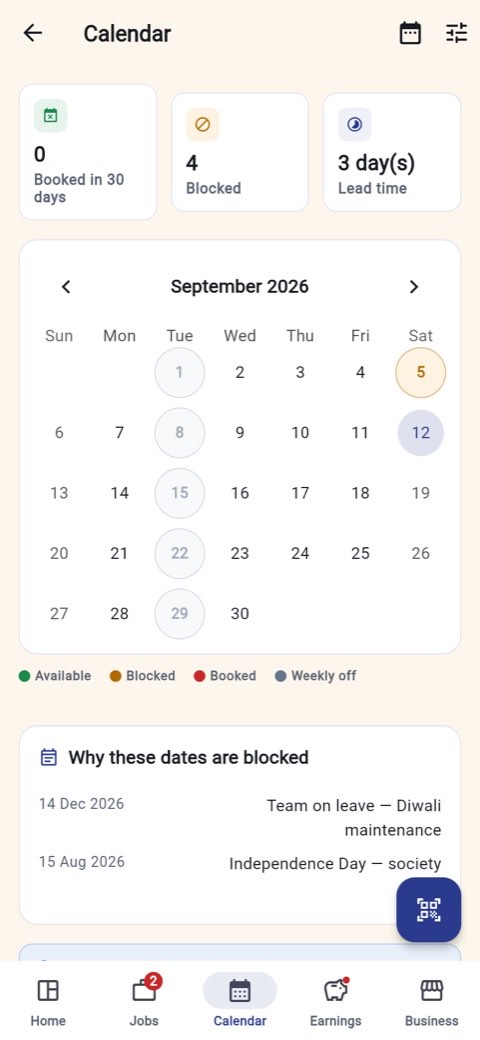
Accepting a job writes the date into your booked set, and the availability filter, the customer's date picker and the accept endpoint all read from it. Booked dates cannot be unblocked by hand.
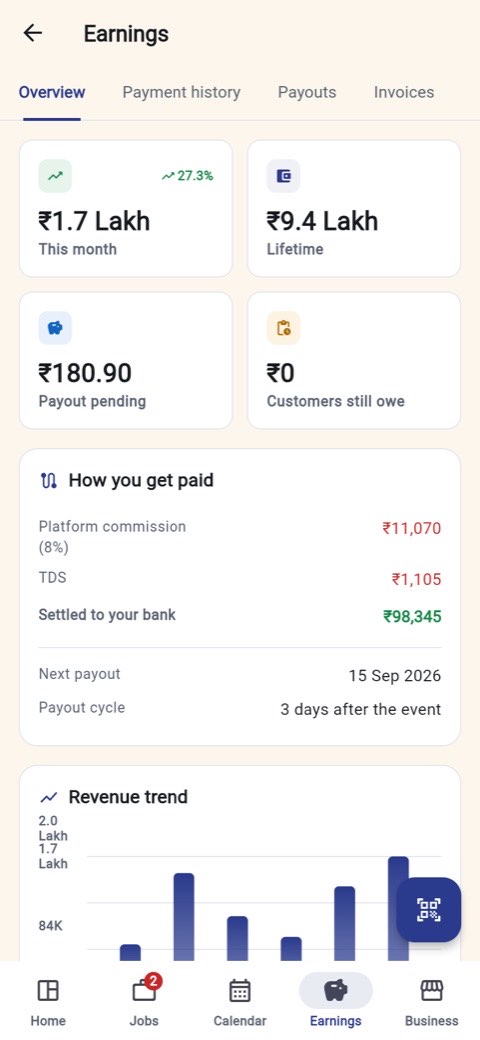
Gross, commission, TDS, net. Settlement batches with UTRs, an account ledger, GST invoices you can share with your accountant, and a payout account gated behind KYC.
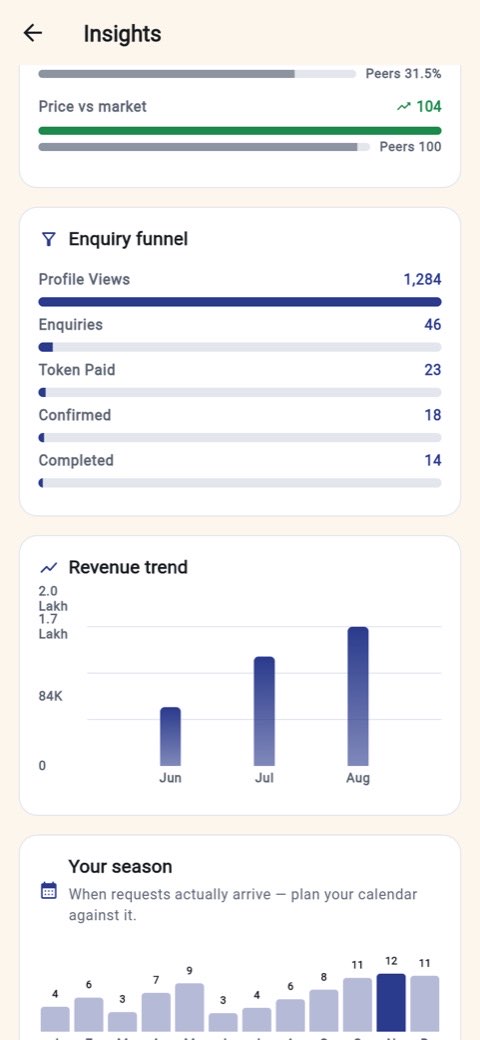
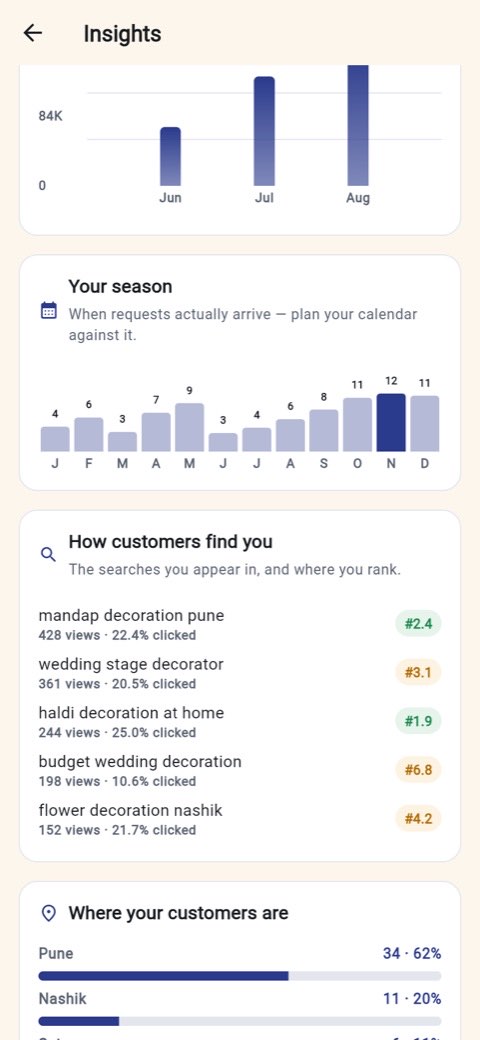
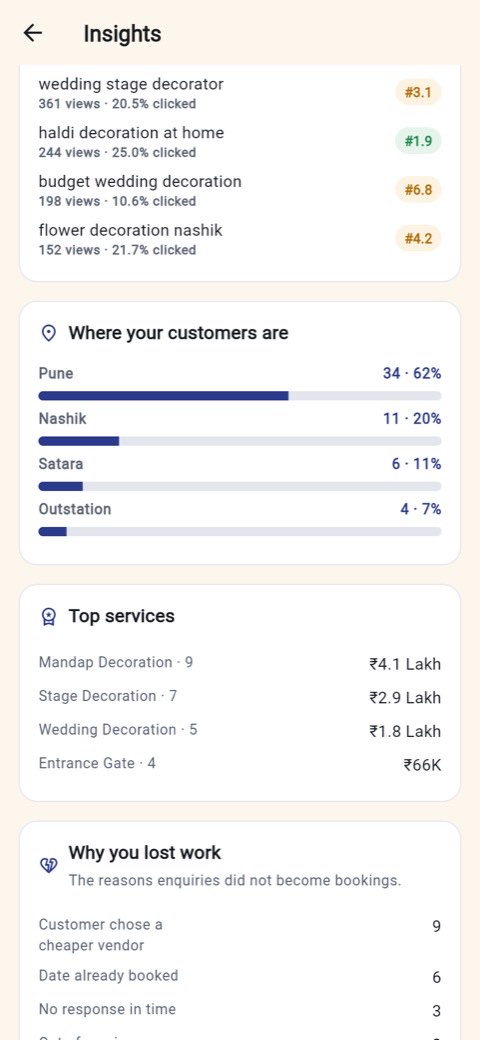
Where you rank on the searches you appear in, your twelve-month demand curve, the areas your customers come from, and how you compare with vendors like you — each finding links to the screen that fixes it.
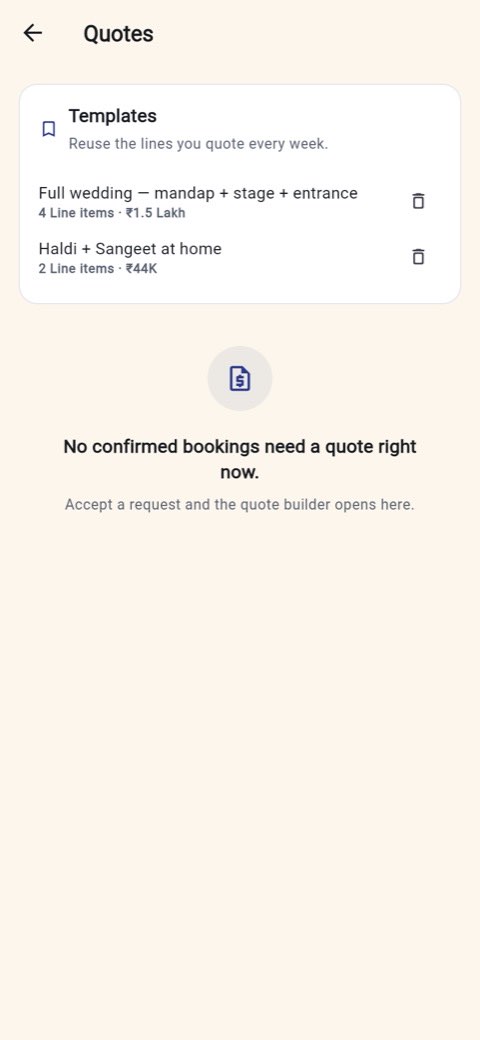
Pre-filled from what the customer actually picked, with reusable templates, a discount and tax line, and a live preview of what you will be paid after commission.
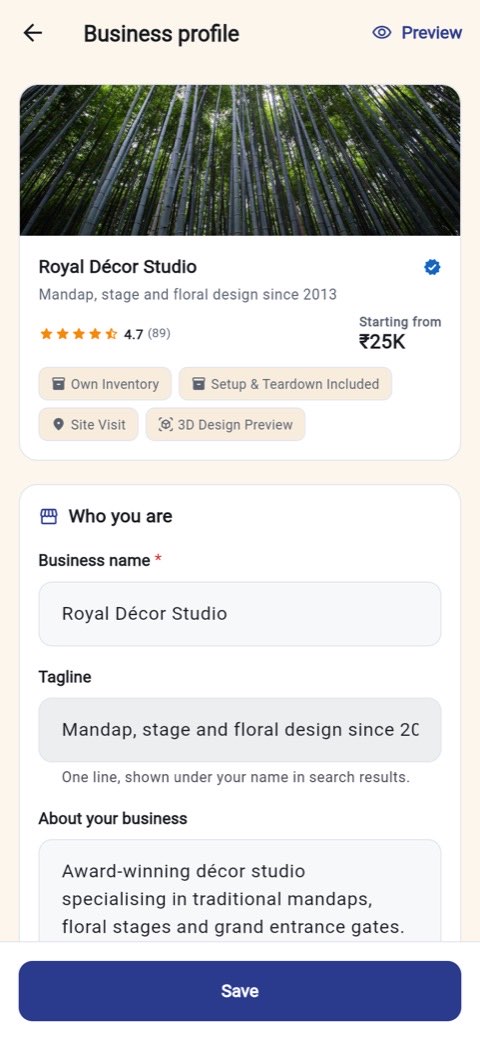
Your public profile with a customer's-eye preview, three package tiers with inclusions and exclusions, and a portfolio with a progress strip against the eight-photo mark.
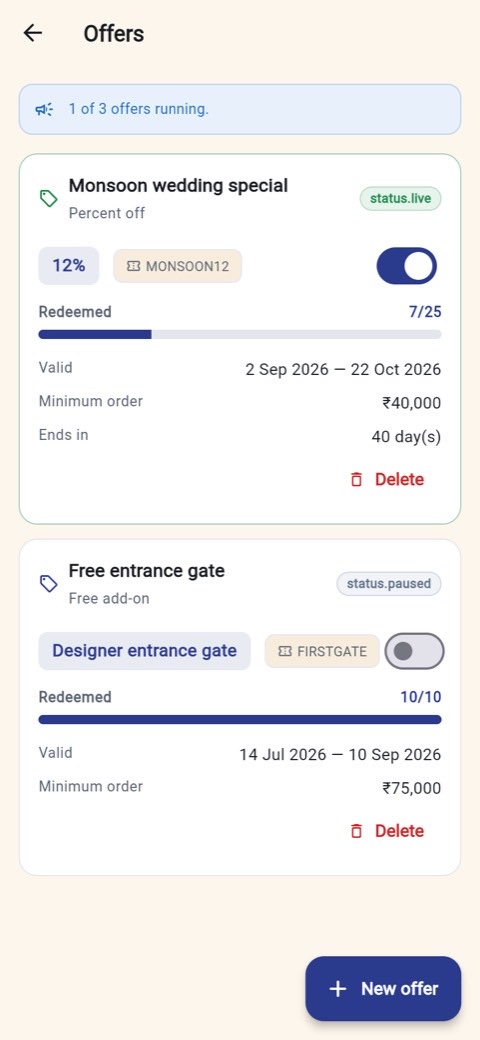
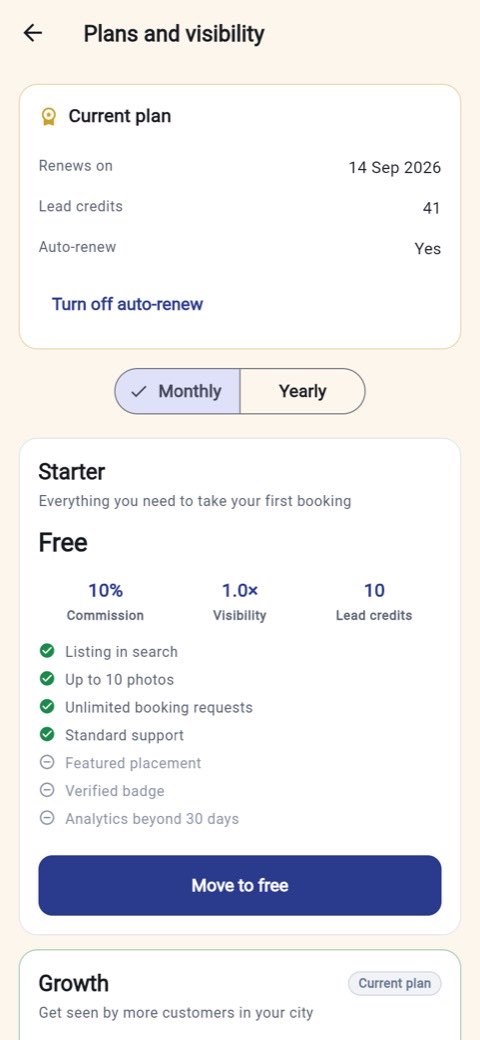
Percentage, flat or free add-on offers with audience, validity and redemption caps. Three plans where commission, search weight and lead credits move together.
Crew with roles and per-job assignment, licences and insurance with expiry warnings that surface on Home, and disputes raised on a thread instead of over the phone.
The Partner side runs indigo and teal, so a vendor who switches never mistakes one app for the other.
Composed home
Job pipeline
Verify a token
Calendar
Earnings
Funnel & revenue
Season & search rank
Reputation score
Quote builder
Storefront
Offers
PlansExplained in numbers
The three charts below are the ones a vendor opens most. The figures are from a running build — a Pune decorator with live traffic — so the shapes are the shapes the app really draws.
Each bar is that stage as a share of the stage above it, which is the number a vendor can actually act on. Absolute counts are on the right.
Twelve months of booking requests for one decorator. November is the peak; June and March are the months worth running an offer in.
Commission is a percentage of what the customer paid; TDS is 10% of the commission, deducted and deposited; the rest is settled to the vendor's bank three days after the event.
Three plans, and the only thing that really matters in them is the rate. Search visibility and lead credits move with it.
| Plan | Price | Commission | Search visibility | Lead credits |
|---|---|---|---|---|
| Starter Take your first booking | Free | 10% | 1.0× | 10 |
| GrowthPopular Get seen across your city | ₹999 / mo ₹9,990 / yr | 8% | 1.8× | 60 |
| Pro Studios and venues running a full calendar | ₹2,499 / mo ₹24,990 / yr | 6% | 2.5× | 200 |
On most marketplaces, an enquiry is a phone number handed to a stranger. Shubhzo does not send either party's phone or email to the other until the booking is confirmed — and it is the server that withholds them, returning masked values and a locked flag, so there is nothing for a modified app to reveal.
+91 98765•••10 until confirmed
No answer in 24h, money back
Every scan, every check reported
Switchable with no restart
At the venue
The vendor opens the scanner standing in front of you. Six things have to be true before the Accept button appears, and each is reported on its own line — so a failure says which one, not just "invalid".
Localisation
Each language is one file. A missing key falls back to English rather than showing a blank label, which is what lets a partially translated language ship at all.
English and Hindi are complete. The other nine carry a 217-key working subset — navigation, primary actions, status chips, auth and errors — and fall back to English for the rest.
Both sides start the same way and diverge on the second screen.
Eleven, each in its own script. Changeable later from Settings at any time.
Plan an event or Grow my business. Signing in with a vendor account overrides the choice.
Mobile and a one-time code. The customer side also asks for a verified email before it opens.
Customers get a checklist built for the occasion. Vendors walk a four-step registration and then KYC.